Your competitors can copy your prompts.
They should never be able to copy your brand.
The Brand AI Framework™ is a leadership framework for executive teams who intend to use AI , without becoming interchangeable.
Most AI experts teach companies how to use AI. The Brand AI Framework™ teaches leadership teams how to remain strategically distinctive while using it.
Speed is being measured everywhere. Brand drift is not , until the brand has already moved.
Competitive convergence is the unmeasured cost of AI adoption.
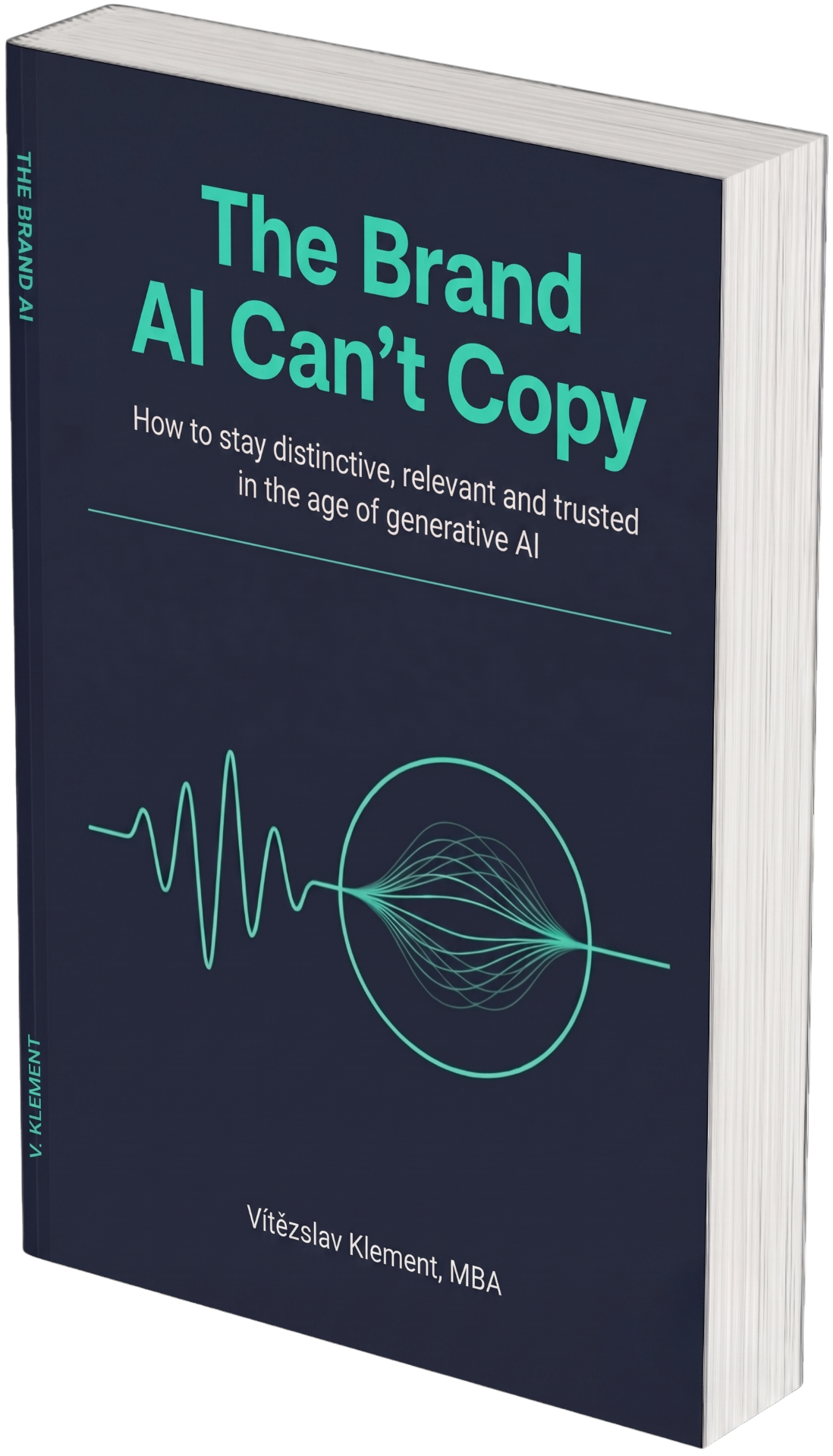
The first edition of the framework is published as a book. The framework itself is the asset.
The conversation most boards haven't had yet
Most companies will not lose to AI because they adopted it too slowly. They will lose because AI quietly erased the differences customers used to remember them by.
Inside the organisation, AI feels like acceleration. From the outside, it looks like convergence , every brand in the category gradually sounding, looking, and reasoning the same.
Speed is being measured. Brand distinctiveness is not.
The companies that lead the next decade will not be the ones that adopt AI faster. They will be the ones that refuse to become interchangeable.
Brand distinctiveness used to be something marketing maintained. Under AI, it is something leadership has to actively protect , or quietly forfeit. That is what the Brand AI Framework™ is built around.
Why this matters more in the GCC
The Gulf is not just adopting AI. It operates under the exact conditions that magnify every consequence of adopting it without a framework.
- Global brands executed by decentralised regional teams
- Multilingual delivery across Arabic and English, where nuance is the brand
- Vendor ecosystems mixing global agencies with local production at speed
- Premium and luxury positioning that does not survive small inconsistencies
- High-growth expansion into multiple markets simultaneously
- Reputational sensitivity that punishes drift before it punishes mistakes
In an environment like this, AI is not a productivity tool. It is an operating model shift , touching marketing, IT, legal, procurement, capability, and executive risk appetite at the same time.
AI amplifies both precision and error. Leadership decides which one scales.
The Brand AI Framework™ was developed for the leaders who intend to scale the first one , on purpose, and with structure.
Two versions of the same company, twelve months apart
Brand drift rarely begins with a wrong decision. It begins with the absence of one. Below is the most common pattern leadership teams recognise too late.
The brand AI cannot dilute
- A recognisable point of view
- A voice executives can defend in a boardroom
- Premium perception that justifies premium pricing
- Confident, coordinated regional execution
- Vendors that adapt to your standard
- Brand distinctiveness treated as a leadership asset
The brand AI quietly averages out
- Messaging that could belong to any competitor
- A tone shaped by whichever model was used that week
- Premium positioning quietly drifting into commodity
- Regional teams optimising in isolation
- Vendors importing their default aesthetic into your brand
- Brand drift treated as a marketing problem
No one schedules the meeting where a brand becomes generic. It happens between meetings.
Built for the people whose names are on the brand
Not for prompt collectors or tool enthusiasts. For the executives who will be asked, in two years, why the brand started to look like everyone else's.
Decisions, not chapters
Each operating principle maps to a decision a leadership team is already making , usually without knowing it.
A shared definition of what your brand cannot afford to let AI flatten
Common language for marketing, IT, legal, and procurement to decide AI questions together
Criteria for separating AI that strengthens brand equity from AI that erodes it
A way to scale output across markets without scaling sameness
Vendor decision rules , who is hired to accelerate, who is trusted with meaning
Boardroom language for AI risk appetite that does not collapse into compliance theatre
Principles that keep regional teams aligned without recentralising creativity
A diagnostic for where AI is making you faster , and where it is making you forgettable
An operating reference for executive workshops, leadership reviews, and strategy resets
A framework is not for the shelf. It is for the next meeting where someone says, "let's just let AI handle it."
The risk that does not show up in any dashboard
Brand erosion under AI almost never begins with a visible failure. It begins with output that is technically correct and strategically invisible.
Messaging tightens but loses edge. Visual identity stays on-brand and stops being recognisable. Tone is consistent across markets and consistently forgettable. Regional teams move faster. Vendors deliver more. Everything looks healthy.
Inside three or four quarters, those small concessions are embedded in workflows, templates, contracts, and habits. By the time the board notices, the change is structural , and the brand has already moved.
The companies that lose to AI will not be outperformed. They will be out-forgotten.
The Brand AI Framework™ treats brand distinctiveness as a leadership KPI , and gives executive teams the operating language to defend it.
The book is the delivery. The framework is the asset.
What sits between these covers is not advice. It is the Brand AI Framework™ , a shared way of seeing AI that CMOs, transformation leads, legal, and the board can adopt together without translating between vocabularies.
The value is not the pages. It is the next conversation those pages make possible.
You don't read it once. You operate from it.
AI is a leadership decision dressed as a marketing one
AI rarely arrives through the front door of the executive committee. It enters through a campaign pilot, a vendor demo, a productivity tool , then quietly reshapes how the whole organisation operates.
Data governance, legal review, procurement, vendor contracts, capability development, executive oversight , each one is silently rewritten by decisions made several layers down.
Most AI failures in the region are not technical. They are structural , the predictable result of treating a leadership question as a tooling one.
If leadership does not define how AI is used, the vendor stack will , and call it strategy.
The moment the Brand AI Framework™ became impossible to ignore
I was sitting in a quarterly review with a regional leadership team. The dashboards were excellent. Output was up. Costs were down. Productivity numbers had never looked better.
Then someone asked, almost in passing, why three of the brand's most recent campaigns , in three different markets, by three different vendors , all sounded faintly like each other. And faintly like a competitor we had spent ten years differentiating from.
No one in the room could explain it. Every individual decision had been correct. The aggregate decision , the one no one had owned , had quietly flattened the brand.
I started seeing the same pattern in every boardroom afterwards. Different industries, different geographies, identical drift. The Brand AI Framework™ is what came out of those rooms.
It is not a guide to using AI. It is a framework for refusing to be averaged by it.
About the author
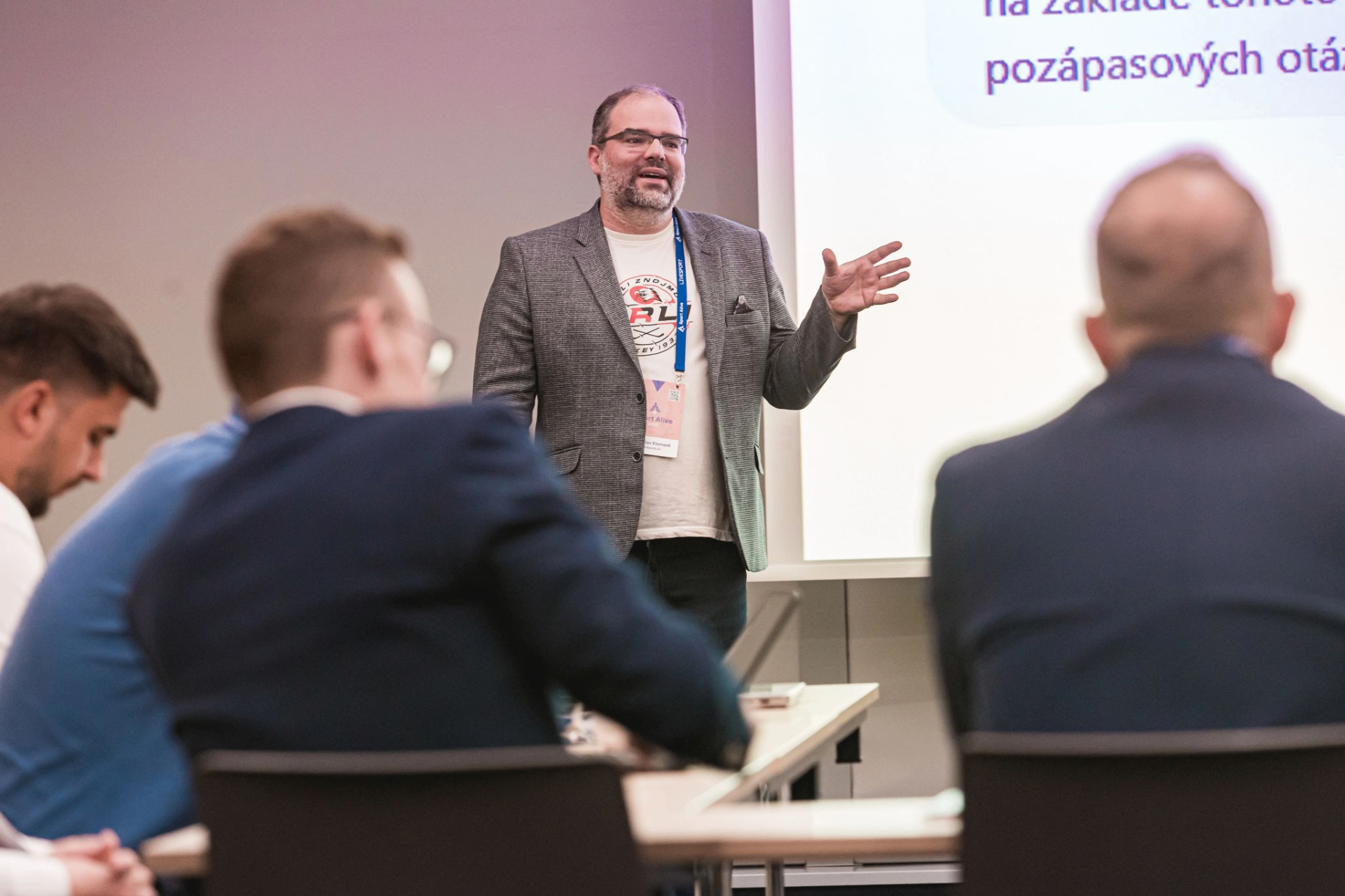
Vítězslav Klement is the creator of the Brand AI Framework™ and an advisor to executive leadership teams adopting it across European and GCC organisations.
His work sits at the intersection of three things most organisations still treat separately: AI adoption, brand authority, and operating model design. The Brand AI Framework™ exists because none of them survive being managed in isolation.
The framework is used as a starting point in executive workshops, leadership alignment sessions, and AI brand governance reviews , across industries and geographies, from European corporates to GCC-based groups.
Built from leadership conversations , not from theory, and not from the vendor side of the table.
His perspectives on AI brand governance and leadership strategy have been featured in regional business media across the Middle East.
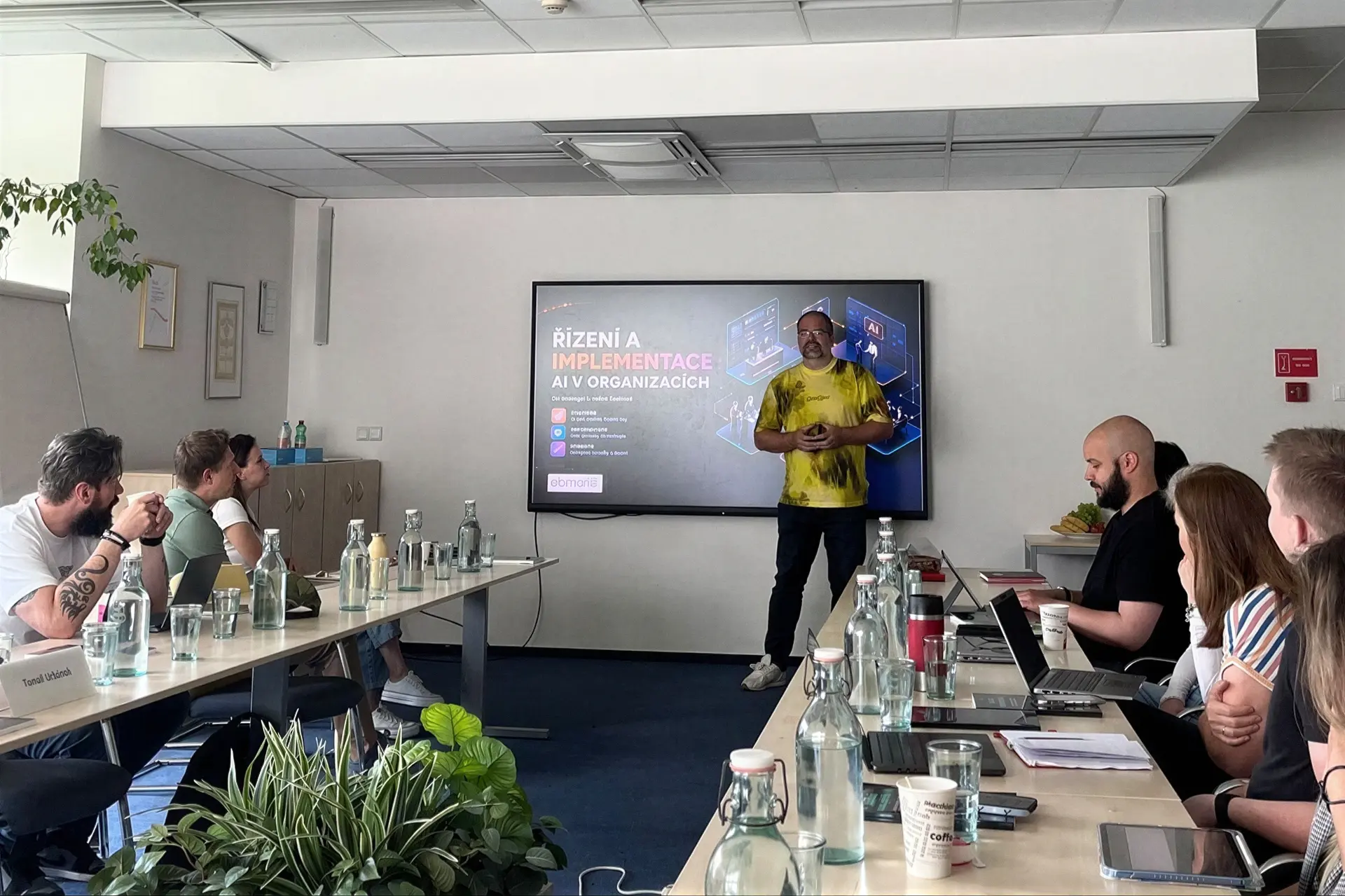
Executive Workshops
Applying the Brand AI Framework™ inside leadership teams.
Helping executive teams implement the Brand AI Framework™ through practical workshops, strategic alignment and real organisational adoption.

Executive Facilitation
Aligning leadership around one operating model.
Facilitating strategic discussions between marketing, legal, IT and executive leadership using the Brand AI Framework™ as a common decision-making language.
Featured in regional business media
Regional coverage of AI adoption, leadership governance, and the future of brand , the same conversations the Brand AI Framework™ was built to sharpen.
How a leadership-first view of AI , built across 18 years in marketing and strategy , is being applied to help organisations adopt AI without losing the qualities that made them worth adopting it for.
The path from macroeconomics and global brand marketing into AI advisory , and how cross-industry exposure shaped a view of AI as an operating model question, not a tooling one.
Access the first edition
The first edition of the Brand AI Framework™. Direct access. No marketplace distribution.
At leadership level, the cost of clarity is always lower than the cost of one misaligned year.
Digital edition
Immediate access. For leaders who want to start the internal conversation this week.
Hardcover
A premium reference object. Designed to sit on the desk of the people who decide.
Leadership set
Print + Digital
Hardcover for the boardroom. Digital for the leadership team. One shared point of view.
Frequently asked questions
Lead AI , before it quietly leads your brand.
Every executive team will make a decision about AI this year.
Most will make it by default. By vendor. By inertia.
The Brand AI Framework™ is for the ones who intend to make it on purpose , and with a brand still recognisable on the other side of it.
A shared operating reference for boards, leadership teams, and executive alignment sessions.